
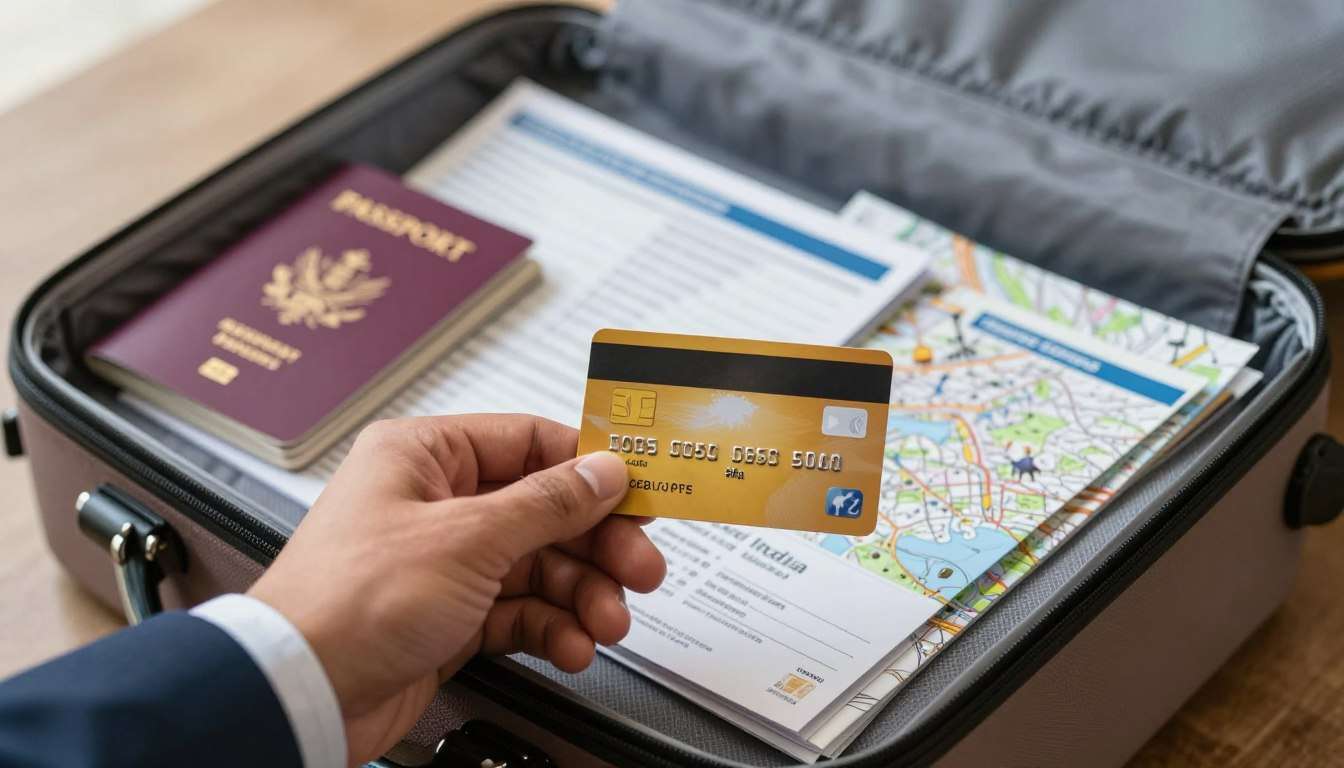

Planning a business trip to India takes careful preparation for smooth entry. You may attend trade fairs, hold meetings, or focus on business development. Matching your visa category to your specific commercial activities is essential for a successful application.
Alongside paperwork, consider your financial safety abroad. Many professionals overlook credit card travel protection when planning international travel. Review existing benefits before an extra credit card travel insurance cost, then focus on work with peace of mind.
Think Your Credit Card Has You Covered? Think Again.
Before your next flight or vacation, check exactly what your card’s travel protection includes—and what it excludes.
👉 Read the full Credit Card Travel Protection guide before you book.
Key Takeaways
- Identify the correct visa category based on your specific business activities in India.
- Follow the seven-step application process to avoid common processing delays.
- Verify your current credit card travel protection to see what coverage you already possess.
- Compare the potential credit card travel insurance cost against your total trip budget.
- Ensure all documentation aligns with Indian immigration requirements for US citizens.
Step 1: Confirm India Business Visa Eligibility and Map Your Trip Costs
Start the India business visa process by checking your eligibility and planning your travel budget. Before making nonrefundable bookings, confirm your activities meet Indian immigration rules.
Check Whether Your Business Activities Qualify for an India Business Visa
An India business visa covers specific commercial activities. You generally qualify when attending business meetings, trade fairs, or exploring sales opportunities in India.
This visa also applies when establishing an industrial venture or recruiting personnel. Always verify that your itinerary matches these professional goals to avoid border problems.
List Flights, Lodging, Meetings, and Other Prepaid Expenses
After confirming eligibility, create a spreadsheet of your expected costs. Include round-trip airfare, hotel accommodations, and daily meeting expenses.
Also include local transportation and possible conference registration fees. A clear budget helps you manage costs and keep enough funds for your trip.
Separate Visa Requirements From Optional Travel Insurance Benefits
Many travelers think card benefits meet entry requirements. However, credit card travel insurance coverage provides optional protection and peace of mind.
A travel insurance credit card may reimburse trip cancellations or medical emergencies. It does not replace required visa documents, so manage both tasks separately.
| Expense Category | Budget Priority | Protection Type |
|---|---|---|
| International Flights | High | Travel insurance credit card |
| Hotel Accommodations | Medium | Credit card travel insurance coverage |
| Visa Application Fees | Mandatory | Government Receipt |
| Business Meeting Costs | Medium | Company Expense Account |
Step 2: Gather Visa Documents and Identify the Credit Card Travel Protection You Need
Match your visa needs with the right credit card travel protection before finalizing travel plans. Organizing paperwork early supports a smooth application and protects your financial investment from unexpected changes.
Prepare a Valid US Passport, Business Invitation, and Supporting Documents
First, make sure your US passport stays valid for at least six months after your planned stay. Get a high-quality scan of its data page, a compliant digital photograph, and a formal invitation letter from your Indian business partner.
Keep your business card and a clear itinerary handy. These documents support your visa application and help authorities verify your professional purpose.
Review Common Travel Risks for an India Business Trip
International business travel can involve unexpected problems. Consider flight cancellations, lost luggage, and sudden medical emergencies that could disrupt your schedule.
Using credit card trip cancellation insurance can protect you if you must cancel for a covered reason. Know your credit card travel insurance benefits before leaving, so you understand exactly what they protect.
Compare Trip Cancellation, Trip Interruption, Delay, Baggage, and Emergency Coverage
Cards offer different protection levels. Review how your card handles travel problems compared with the possible credit card travel insurance cost of a standalone policy.
- Trip Cancellation: Reimburses non-refundable costs if you cancel before departure.
- Trip Interruption: Covers expenses if your trip is cut short.
- Baggage Delay: Provides funds for essentials if your luggage is lost or delayed.
- Emergency Medical: Assists with costs if you fall ill abroad.
| Feature | Credit Card Protection | Purchased Policy |
|---|---|---|
| Primary Coverage | Limited/Secondary | Comprehensive |
| Medical Limits | Low | High |
| Cost | Included in Annual Fee | Additional Premium |
Flight Delayed? Trip Canceled? Baggage Missing?
Your credit card may provide travel protection, but eligibility and reimbursement limits can depend on the card and the circumstances.
👉 Discover what to check before relying on your credit card for travel protection.
Understand the Difference Between Built-In Benefits and Purchased Travel Insurance
Many travelers use built-in coverage, but it has limits. Although credit card trip cancellation insurance is convenient, it often strictly defines a “covered reason.”
For high-value bookings, the credit card travel insurance cost may be lower than a premium policy, but coverage is narrower. Check your credit card travel insurance benefits to determine whether your India trip needs extra medical or evacuation coverage.
Step 3: Submit the India Business Visa Application Before Booking Nonrefundable Travel
Before booking nonrefundable flights or hotels, complete your visa application through the official government website. Use the official Government of India e-Visa portal to avoid fraud and unnecessary third-party help. Accuracy is your best defense against delays that could harm your business schedule.
Complete the Online India Business Visa Application Accurately
Make sure every form detail matches your passport exactly. Double-check your name, passport number, and travel dates before submitting. Incorrect information can cause rejection, especially after you book travel.
Upload Passport Photos and Business Documentation in the Required Format
The portal requires specific formats for your digital passport photo and business invitation letter. Make sure your images are clear and meet the website’s size rules. Properly formatted documents help prevent technical errors during review.
Pay the Visa Fee and Save Application Receipts and Confirmation Emails
After payment, save all receipts and confirmation emails right away. They prove your application status and can support a claim later. Keep these records in a digital folder to support credit card trip cancellation insurance claims if your trip changes.
Use a Credit Card With Strong Travel Protections for Eligible Application and Trip Purchases
Choose your card carefully when paying visa fees and travel costs. Many travelers seek the best credit cards for travel insurance for protection against unexpected events. A credit card travel insurance comparison shows which cards provide the strongest credit card travel protection for your needs.
| Credit Card Provider | Primary Protection Focus | Best For |
|---|---|---|
| USAA | Comprehensive Trip Coverage | Military Families |
| Chase United | Airline-Specific Benefits | Frequent Flyers |
| Discover | Simplified Travel Perks | Budget Travelers |
| BMO / Southwest | Regional & Domestic | Flexible Itineraries |
Whether you use USAA credit card travel protection or benefits from BMO, Chase United, Discover, or Southwest, check your coverage limits. To use credit card trip cancellation insurance well, pay trip costs with the card offering the strongest protection. Staying organized helps protect your business interests and financial investment.
Step 4: Compare USAA, BMO, Chase United, Discover, and Southwest Credit Card Travel Protection

Choosing the right financial tool for an international trip requires a careful credit card travel insurance comparison. Many cards offer basic perks, but your credit card travel insurance coverage can differ greatly by provider. Knowing these differences helps protect you during a business trip to India.
USAA Credit Card Travel Protection for Eligible Cardholders
Check Trip Cancellation, Trip Delay, Baggage, Rental Car, and Emergency Assistance Benefits
USAA often provides strong credit card travel protection for its members. These benefits may cover trip cancellation, delays, and lost baggage when you pay for travel with an eligible card.
Verify Eligibility Rules, Covered Reasons, Travel-Purchase Requirements, and Exclusions
Review the specific credit card travel insurance policy to learn which cancellation reasons qualify. You must also meet the issuer’s requirements for trip expenses to receive reimbursement.
BMO Credit Card Travel Protection and Important Policy Conditions
Review Coverage Limits, Eligible Expenses, and Whether Benefits Are Primary or Secondary
BMO cards offer specific credit card travel insurance benefits for unexpected travel problems. Check whether these benefits provide primary coverage or supplement your personal insurance.
Chase United Credit Card Travel Protection for United-Focused Travelers
Examine Credit Card Trip Cancellation Insurance, Delay Coverage, and Baggage Protections
Travelers flying with United may receive tailored credit card travel insurance coverage. These protections address flight delays and baggage loss, common concerns for international business travelers.
Discover Credit Card Travel Protection and Potential Coverage Gaps
Confirm Which Discover Card Benefits Apply and Whether Separate Travel Insurance Is Needed
Discover cards may focus on other perks, so verify whether your specific card includes comprehensive travel insurance. You may need a separate policy to fill gaps in your credit card travel insurance benefits.
Southwest Credit Card Travel Protection for Domestic Connections and Positioning Flights
Compare Its Protections With the Needs of an International India Business Trip
If you use a Southwest card for domestic positioning flights, check how its protections apply to your full itinerary. These cards work well for domestic travel, but they may lack the international medical coverage offered by the best credit cards for travel insurance.
- Always check your specific credit card travel insurance policy document.
- Confirm if your card requires the full trip cost to be charged to the account.
- Keep all receipts and documentation for any potential claims.
Step 5: Verify Your Credit Card Travel Insurance Coverage Before Paying for the Trip
Many travelers assume every trip expense has coverage. Review your credit card travel insurance coverage before you finalize plans. A credit card travel insurance comparison can help protect your budget before booking.
Read the Credit Card Travel Insurance Policy and Benefits Guide
Each issuer provides a benefits guide that explains what the policy protects. Download it and read the fine print carefully. Understanding your credit card travel insurance policy shows which situations qualify for claims.
Confirm What “Pay With the Card” Means for Flights, Hotels, and Transportation
Most policies require you to charge the full fare or much of the trip to the eligible card. Having the card in your wallet rarely activates coverage. Confirm whether taxes, fees, or partial payments qualify under your travel insurance credit card terms.
Check Coverage Limits, Covered Causes, Preexisting-Condition Rules, and Exclusions
Policies do not cover every event, and they may define a “covered cause” strictly. Check whether preexisting medical conditions could cancel your credit card trip cancellation insurance. Coverage limits can differ greatly between premium and standard cards.
Ask the Issuer About Coverage for Business Travel, Colleagues, and Traveling Companions
Business travel can involve different risks than leisure trips. Check whether your policy covers colleagues or companions traveling with you. Always call the number on the back of your card with questions about your travel plans.
Check Whether Visa Fees, Change Fees, Medical Treatment, and Evacuation Are Covered
Indian e-Visa fees are often nonrefundable and may not have coverage under standard policies. Check whether your credit card travel insurance policy covers emergency medical treatment or evacuation. These benefits matter during international business travel.
| Coverage Feature | Standard Protection | Premium Protection |
|---|---|---|
| Trip Cancellation | Limited | Comprehensive |
| Medical Evacuation | Often Excluded | Included |
| Visa/Admin Fees | Not Covered | Rarely Covered |
| Business Equipment | Excluded | Included |
Step 6: Choose the Best Credit Card Travel Protection and Prepare for a Claim

Choosing the best credit card travel protection can bring peace of mind abroad. Many travelers think cards cover everything, but check the terms before leaving for India.
Use a Credit Card Travel Protection Comparison to Match Coverage With Your Risks
A thorough credit card travel insurance comparison helps you find coverage gaps. Check for trip interruption, baggage delay, and emergency medical benefits.
Not all cards offer the same security. Match your trip risks with card benefits to decide whether you need more coverage.
Evaluate the Best Credit Cards for Travel Insurance by Coverage, Limits, and Cost
When seeking the best credit cards for travel insurance, check maximum payouts and coverage conditions. Some cards require you to pay for the entire trip with the card.
The credit card travel insurance cost is often included in your annual fee, which can lower your total cost. Still, check covered cancellation causes because providers vary widely.
| Coverage Type | Credit Card Protection | Standalone Policy |
|---|---|---|
| Trip Cancellation | Limited/Specific | Comprehensive |
| Medical Emergencies | Often Minimal | High Coverage |
| Evacuation | Rarely Included | Standard Feature |
| Cost | Included in Fee | Additional Premium |
Decide Whether a Separate Travel Insurance Policy Offers Better Protection
Credit cards offer convenience, but they may lack enough coverage for international travel. Weigh the risks of relying only on your card’s benefits.
Compare Credit Card Travel Insurance Cost With Standalone Medical and Cancellation Coverage
Standalone policies often offer broader credit card trip cancellation insurance options for unforeseen events. The credit card travel insurance cost is lower, but standalone coverage may save more during a major disruption.
Prioritize Emergency Medical and Evacuation Coverage for International Travel to India
Travel to India brings health risks that standard credit card policies may not cover fully. Credit card travel insurance benefits rarely include high-limit emergency medical evacuation for long international trips.
Save Documents Needed for a Credit Card Travel Insurance Claim
Proper documentation can help you win a successful claim. Organize your files as soon as you plan your trip.
Keep Receipts, Itineraries, Visa Records, Medical Reports, and Cancellation Notices
Keep visa records and passport copies to prove your travel plans and compliance. Store digital and paper copies of receipts, itineraries, and medical reports safely.
Report Delays, Cancellations, Lost Bags, or Emergencies Within the Policy Deadline
Time matters when filing a claim for credit card trip cancellation insurance. Providers often set strict deadlines, so contact your card issuer immediately after an emergency.
Step 7: Complete Final Visa Checks and Confirm What Protection Is Best for Your Credit Cards
As your departure date nears, final preparations become the last step toward a successful business trip. Organizing your documents now can prevent unnecessary stress at the airport. A careful review ensures your credit card travel protection is ready if your plans change unexpectedly.
Verify the Approved India Business Visa Before Departure
Before leaving, confirm that your visa status is officially approved and active. Print a physical copy of your e-Visa or visa grant notice for your passport. Keeping a digital backup on your phone or email is also a smart safety measure for international travel.
Recheck Passport Validity, Visa Details, Flight Plans, and Business Contacts
Double-check that your passport remains valid for at least six months after your planned return date. Make sure your flight itinerary matches the dates on your visa documents. Also, keep your primary business contacts in India handy if you need to reach them after arrival.
What Is the Best Protection for Your Credit Cards?
Many travelers wonder how to protect their money while abroad. The best credit cards for travel insurance offer strong features, but you must understand how they work. A credit card travel insurance comparison shows covered expenses and possible gaps.
Choose Built-In Credit Card Travel Protection for Covered, Card-Paid Trip Expenses
If you paid for flights or hotels with your card, you likely have credit card travel insurance benefits. These protections can help with common problems, such as baggage delays or trip cancellations. Always confirm that your card covers your type of travel.
Choose Standalone Travel Insurance When Medical, Evacuation, or Cancellation Needs Exceed Card Benefits
Cards can help, but they often lack high-limit medical or emergency evacuation coverage. A standalone policy may be better if your trip involves major financial risks or health concerns. Use the table below to compare your options:
| Feature | Credit Card Protection | Standalone Insurance |
|---|---|---|
| Primary Use | Common travel mishaps | Medical and evacuation |
| Cost | Included with card | Additional premium |
| Coverage Depth | Limited/Specific | Comprehensive |
Combine Card Benefits and a Separate Policy Only After Confirming That Coverage Does Not Overlap
You can sometimes combine credit card travel insurance coverage with a private policy for greater peace of mind. However, read the fine print to avoid paying for duplicate protection. Confirm that claim rules allow both policies to work together without conflict.
- Review your credit card travel insurance benefits guide carefully.
- Check for exclusions regarding pre-existing conditions.
- Keep all receipts for any expenses you intend to claim.
Conclusion
A successful business trip to India requires careful attention to visa rules and financial safeguards. Follow the outlined seven-step process to keep your documents valid and protect your travel investment.
Use the official India e-Visa portal for your application. Wait for your approved electronic travel authorization before finalizing any nonrefundable flight or hotel bookings. This habit helps prevent stress and financial loss.
Your payment method plays an important role in trip security. The best credit card travel protection can help when delays or baggage issues occur. Review your specific card benefits to learn which expenses qualify for reimbursement.
Credit card travel protection covers many common travel problems. Consider a standalone insurance policy for comprehensive medical care and emergency evacuation needs. Using both types of coverage creates a strong safety net for your international journey.
Check your passport validity and visa details once more before going to the airport. Staying organized lets you focus on your professional goals after arriving. Safe travels as you pursue upcoming business opportunities in India.
EEAT: Experience
Travel protection becomes especially important when an unexpected event turns a prepaid vacation into a financial problem.
One publicly shared traveler experience on Reddit described using a Capital One Venture X card after becoming ill shortly before a cruise. The traveler reported submitting medical documentation, cancellation information, proof of non-refundable expenses, itinerary details, and evidence that the trip had been charged to the card. The traveler subsequently reported that the claim was approved for the full eligible amount. This is an individual consumer experience, not a guarantee that another cardholder will receive the same result.
Another traveler publicly described using Chase card trip-cancellation benefits after a serious leg injury prevented a planned trip. The traveler reported gathering medical documentation, purchase records, cancellation confirmation, and proof that the trip was non-refundable.
These experiences illustrate an important lesson: having a travel protection benefit does not automatically mean a claim will be paid. Documentation, eligibility, covered reasons, payment method, limits, exclusions, and deadlines can all matter.
EEAT: Expertise
Before relying on credit card travel protection, check these five details:
- How did you pay for the trip?
Some benefits require the eligible card to be used to purchase the covered transportation or other travel expense. - What events are covered?
Covered reasons can include specific illnesses, injuries, severe weather, or other qualifying circumstances, depending on the card. - What are the reimbursement limits?
A card may cover eligible expenses only up to a stated dollar amount. - What documentation is required?
Depending on the claim, travelers may need receipts, itineraries, cancellation records, medical documentation, carrier statements, or other evidence. Chase specifically notes that claimants may need supporting documentation and provides claim-filing instructions for its Sapphire benefits. - What exclusions and conditions apply?
Marketing pages are not a substitute for the actual benefit terms. American Express, for example, directs cardmembers to the applicable Guide to Benefits and says terms, conditions, limits, and exclusions apply.
EEAT: Authoritativeness
The strongest sources for researching credit card travel protection are the card issuer’s official benefit documents and government consumer resources.
Chase’s official information describes several travel protections available on eligible Sapphire cards, including trip cancellation/interruption, trip delay, baggage delay, lost luggage, emergency assistance, and rental-car coverage.
American Express also publishes specific benefit information for eligible cards, including trip cancellation/interruption and trip delay protection. Its official pages emphasize that eligibility and coverage depend on the particular card and applicable terms.
For broader credit-card consumer issues, the Consumer Financial Protection Bureau provides information about credit cards and a complaint process for consumers who have unresolved problems with financial products or services.
EEAT: Trustworthiness
A trustworthy travel-protection guide should never suggest that every credit card automatically provides comprehensive travel insurance.
Instead, readers should verify:
- The exact card name and version
- Whether the trip was purchased with the card
- Eligible travelers
- Covered causes of cancellation or interruption
- Minimum delay requirements
- Maximum reimbursement
- Deductibles, if applicable
- Exclusions
- Claim deadlines
- Required documents
- Whether another insurer, airline, or provider must reimburse the traveler first
For example, Chase explains that some trip-delay reimbursement can require eligible travel to have been purchased with the card and that other reimbursement may need to be exhausted first.
This is why readers should verify the current Guide to Benefits before booking or relying on credit card travel protection.
What Credit Card Travel Protection May Cover
Depending on the card, travel protection may include:
| Potential benefit | What it may help with |
|---|---|
| Trip cancellation | Certain prepaid, non-refundable expenses after a covered cancellation |
| Trip interruption | Eligible expenses when a covered trip must be interrupted |
| Trip delay | Certain meals, lodging, and other eligible expenses after a qualifying delay |
| Baggage delay | Essential purchases while waiting for delayed baggage |
| Lost luggage | Certain losses involving damaged, lost, or stolen baggage |
| Rental-car protection | Certain covered rental-car theft or collision losses |
| Travel assistance | Assistance or referrals during travel |
Coverage differs by card, so this table should be treated as a general guide rather than a promise of coverage.
Sources and References
- Chase — Sapphire Travel Insurance Guide
- American Express — Trip Cancellation & Interruption Insurance Terms
- American Express — Trip Delay Insurance Terms
- Consumer Financial Protection Bureau — Credit Cards
- Consumer Financial Protection Bureau — Submit a Complaint
Don’t Leave Your Trip Protection to Guesswork.
Check your card’s coverage, qualifying expenses, documentation requirements, exclusions, and claim deadlines before traveling.
👉 Use this guide to review your credit card travel protection before your next trip.
Real Traveler Experience #1: A Cruise Canceled Because of Illness
A traveler shared a detailed experience after becoming sick just days before a cruise. The traveler had booked the cruise using a Capital One Venture X card and initially expected the trip to go ahead. After developing severe symptoms, the traveler visited urgent care and was advised not to travel.
The traveler reported filing a trip-cancellation claim and providing medical documentation, booking information, cancellation records, and evidence of the non-refundable expenses. The experience was shared specifically to help other travelers understand what the claim process could involve.
What travelers can learn: A credit card travel-protection benefit may require documentation showing both the qualifying event and the financial loss. Keeping medical records, receipts, booking confirmations, and cancellation evidence can therefore be important.
Read the traveler’s original experience on Reddit.
Real Traveler Experience #2: A Weather Cancellation That Created Overnight Expenses
In another recent public account, a Venture X cardholder described a flight being canceled because of weather. The cancellation left the traveler facing an overnight delay before the airline could provide a replacement flight.
The traveler reported paying for food and drinks during the disruption and keeping receipts and screenshots showing the purchases and traveler also kept evidence of the canceled flight and later submitted those records as part of a reimbursement claim.
The traveler reported that the claim was approved.
What travelers can learn: When a covered travel disruption happens, travelers should preserve the airline’s cancellation or delay notification, boarding passes, hotel and meal receipts, and proof of how the original trip was paid for.
Read the traveler’s original experience on Reddit.
Real Traveler Experience #3: Three Days Stranded After a Snowstorm
A Chase Sapphire Preferred cardholder publicly described a different situation involving a return flight from Saint Martin. According to the traveler, a snowstorm caused the return flight to be delayed, and the traveler could not obtain another flight home for three days.
The traveler reported spending approximately $1,800 on hotels, meals, and other expenses while waiting. After returning home, the traveler filed a trip-delay claim and uploaded receipts and itinerary information. The traveler reported receiving $1,000 in reimbursement under the card’s trip-delay protection.
Interestingly, the traveler also reported having purchased separate travel insurance for the same trip and described a different reimbursement limitation under that policy.
What travelers can learn: Different forms of travel protection can have different limits, eligibility rules, and reimbursement structures. Having multiple forms of protection does not necessarily mean every expense will be reimbursed twice.
Read the traveler’s original experience on Reddit.
Important Note About These Stories
These are individual traveler reports, not guarantees of coverage. The outcomes described by the travelers depend on their particular cards, trips, circumstances, documentation, and applicable benefit terms at the time of their claims.
Before relying on credit card travel protection, readers should check their card’s current Guide to Benefits, including covered reasons, eligibility requirements, reimbursement limits, exclusions, and claim documentation requirements.
Frequently Asked Questions
No. Trade fairs, exhibitions, and formal meetings require an India business visa. Using a tourist visa for business can cause legal problems or entry refusal.
US citizens should use the official Government of India portal at indianvisaonline.gov.in. Avoid third-party sites charging extra credit card travel insurance cost or unofficial “processing fees.”
Usually, no. Most policies exclude government fees and visa costs. The India e-Visa fee is non-refundable, so you may absorb it if plans change.
Chase United cards and high-end USAA products often offer strong credit card travel insurance benefits. Compare each card’s limits with your total prepaid expenses.
Most issuers require you to charge part or all of your travel costs to that card. This includes flights and hotels. Check the benefits guide for the exact percentage.
Many BMO plans include emergency medical coverage. However, coverage may last only a set number of days, such as 15 days. Longer trips may need separate travel insurance or a standalone policy.
Southwest does not fly to India. Its credit card protection may cover domestic “positioning flights” within the US. Check whether protection includes non-Southwest segments on a multi-carrier trip.
You usually need your credit card statement, itinerary, and prepaid expense receipts. You also need proof of loss, such as a medical report or delay statement. Keep your India e-Visa confirmation to show your travel plans.
Disclaimer: Individual experiences do not guarantee coverage or claim approval. Credit card travel-protection benefits vary by card and can change over time. Always review your card’s current Guide to Benefits, coverage limits, exclusions, and claim requirements before relying on the benefit.

Karthick is the Founder of Wandersure Coverage, a travel and insurance-focused blog helping global travelers make smarter decisions.
Based in Chennai, India, Karthick has several years of experience researching international travel, travel insurance policies, and legal resources such as accident attorneys in the United States. He has published 700+ articles covering travel packages, insurance guides, and trip planning tips.
While not a licensed insurance broker or attorney, Karthick spends extensive time analyzing policy terms, coverage details, and real-world travel scenarios. His goal is to simplify complex information into clear, practical advice so travelers can stay protected and travel with confidence.
He regularly updates content to reflect the latest travel rules, insurance policies, and legal guidelines for international travelers.