
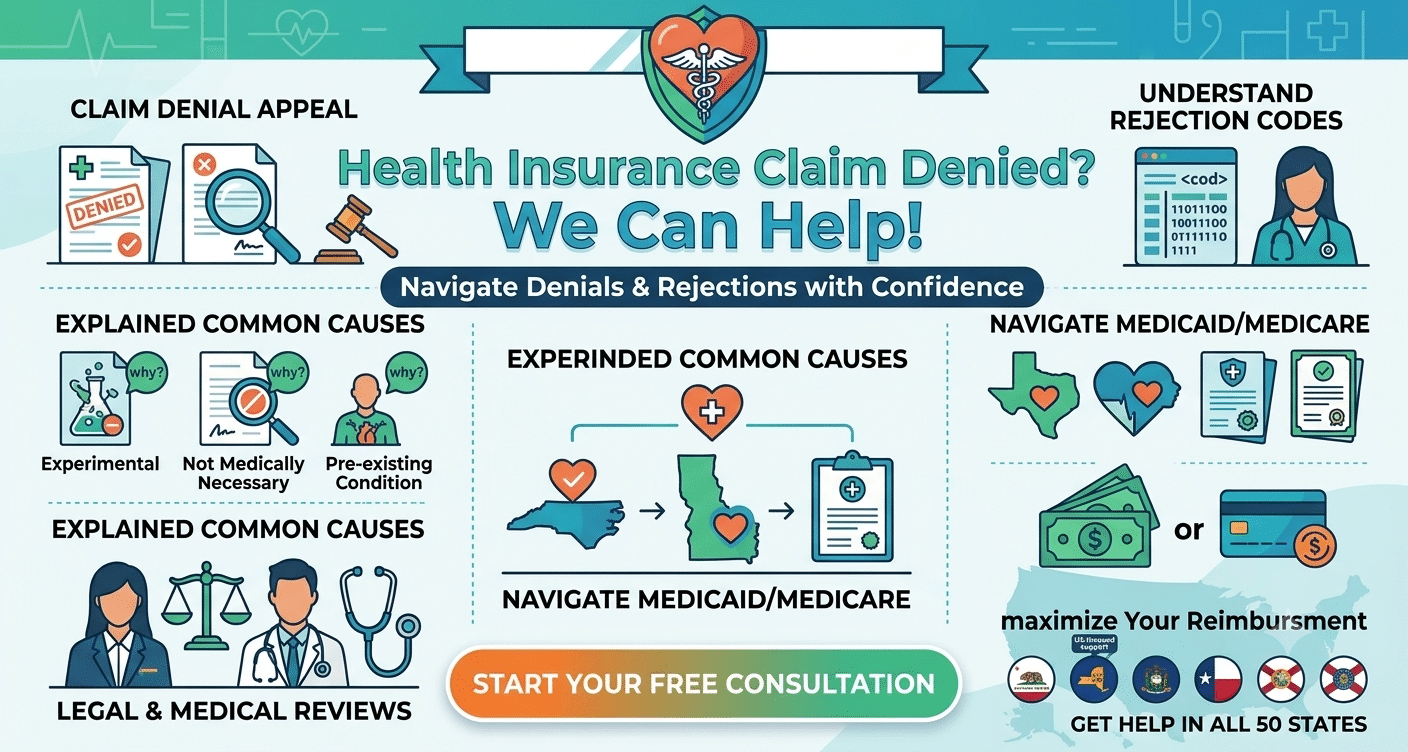
Introduction: Health Insurance Claim Denied? Here’s What You Should Do
Health insurance claim denied notifications can create financial stress when you or a family member needs medical treatment. Imagine paying your health insurance premiums every year, visiting a hospital for treatment, and expecting your insurance company to cover the expenses. However, instead of receiving payment, you receive a claim rejection letter. What happens next? Should you pay the entire hospital bill? Can you challenge the insurance company’s decision? Can you recover your money through a legal complaint?
The good news is that a rejected health insurance claim does not always mean the end of your options. Depending on your policy, medical records, claim circumstances, and applicable insurance regulations, you may have the right to request a review or file a formal appeal. Moreover, policyholders in India can approach the insurer’s grievance department, IRDAI’s Bima Bharosa portal, and the Insurance Ombudsman when appropriate.
In this guide, you will discover why insurers reject claims, what to do if a health insurance claim is denied in India, how alcohol-related exclusions work, and how medical debt affects patients in the United States. Additionally, you will learn about legal assistance, insurance appeals, medical bill calculations, and ways to protect your finances.
Before accepting a rejection, understand your policy, request the exact reason in writing, and explore your available appeal options.
What Does Health Insurance Claim Denied Mean?
A health insurance claim denial occurs when an insurance company refuses to pay all or part of a medical expense submitted under an insurance policy.
For example, imagine that you purchase a health insurance policy with ₹10 lakh coverage. Later, you undergo surgery that costs ₹3 lakh. You submit the hospital bills, medical reports, prescriptions, and discharge summary.
However, the insurer rejects the claim because it identifies an exclusion or a policy condition that it believes applies to your treatment.
In this situation, you receive a claim rejection or repudiation communication explaining the insurer’s decision.
Nevertheless, a rejection does not automatically establish that the insurer acted correctly. You should compare its explanation with the actual policy wording and applicable regulations.
Health Insurance Claim Rejection vs Claim Repudiation
Although people often use these expressions interchangeably, their practical meaning can differ.
| Term | Meaning | Example |
| Claim rejection | The insurer refuses a submitted claim | Missing required information |
| Claim repudiation | The insurer formally refuses liability under the policy | A specific exclusion applies |
| Partial settlement | The insurer pays only an eligible portion | Room rent limit reduces payment |
| Claim query | The insurer requests clarification or documents | Additional medical records required |
| Cashless denial | The hospital’s cashless authorization request is refused | Insurer needs further verification |
Importantly, a cashless authorization denial does not necessarily prevent you from submitting a reimbursement claim. Check your policy and ask the insurer for the available alternatives.
11 Common Reasons Why a Health Insurance Claim Gets Denied
Understanding the reasons behind a health insurance claim denied notification can help you identify whether the insurer has applied your policy correctly.
However, every policy has different conditions. Therefore, always check your Customer Information Sheet, policy schedule, exclusions, and complete policy wording.
1. Pre-Existing Medical Conditions
Pre-existing diseases can affect health insurance coverage.
For instance, imagine that a person already has diabetes before purchasing a policy. After six months, the person requires hospitalization because of complications associated with diabetes.
The insurer may reject the claim if the applicable waiting period has not ended and the policy excludes the treatment during that period.
However, insurers cannot simply assume that every illness existed before policy purchase. Medical history, disclosure information, applicable waiting periods, and policy conditions matter.
What should you do?
- Review your policy’s pre-existing disease waiting period.
- Check the information you disclosed during application.
- Request the medical evidence supporting the rejection.
- Ask whether the applicable waiting period has expired.
- Submit an appeal if the insurer has misunderstood your medical history.
2. Incomplete or Incorrect Information
Incorrect information in your application can create problems during claim processing.
For example, an applicant may accidentally provide an incorrect date of diagnosis or fail to disclose a medical condition.
As a result, the insurer may investigate whether the information affected its decision to issue the policy.
However, an insurer should explain the contractual and regulatory basis for its decision. Do not accept a general statement such as “incorrect information” without requesting details.
3. Policy Waiting Period Has Not Ended
Most health insurance policies include certain waiting periods.
These periods may apply to pre-existing diseases, specified treatments, and particular medical conditions.
For example:
- Initial waiting period: Check the policy’s applicable terms.
- Pre-existing disease waiting period: Depends on the policy and regulatory requirements.
- Specified disease waiting period: Applies to listed conditions and procedures.
IRDAI’s 2024 health insurance framework introduced important policyholder protections, including a 60-month moratorium provision subject to specified exceptions.
Therefore, check the policy wording and the rules applicable to your policy rather than relying on outdated online information.
4. Missing Medical Documents
Insurance companies need appropriate documents to evaluate claims.
Missing information can delay processing or create a reason for a claim query.
Common documents include:
- Health insurance policy details.
- Hospital admission records.
- Discharge summary.
- Doctor’s prescriptions.
- Diagnostic reports.
- Original bills and receipts.
- Pharmacy invoices.
- Payment confirmations.
- Medical certificates, where applicable.
Practical tip: Maintain a digital folder containing every medical document. This makes it easier to answer insurer queries and prepare an appeal.
5. Treatment Falls Under Policy Exclusions
Every health insurance policy contains exclusions.
These exclusions identify medical expenses or situations that the insurer does not cover under the applicable contract.
Examples may include:
- Certain cosmetic procedures.
- Non-medically necessary treatments.
- Specified dental procedures.
- Particular experimental treatments.
- Expenses specifically excluded by the policy.
- Certain alcohol- or substance-related circumstances, depending on the wording.
However, an exclusion must be read carefully. A broad assumption that every treatment connected with a particular activity is automatically excluded can lead to an incorrect conclusion.
6. Hospital Room Rent Limits
Some policies include room rent restrictions.
For example, imagine that your policy permits a room costing ₹5,000 per day, but you select a room costing ₹10,000 per day.
Depending on the policy, the insurer may apply proportionate deductions to eligible associated expenses.
| Particulars | Amount |
| Actual room rent | ₹10,000 |
| Permitted room rent | ₹5,000 |
| Difference | ₹5,000 |
| Actual hospital bill | ₹2,00,000 |
If a proportionate deduction applies to eligible expenses, the final payment could fall below ₹2 lakh.
The actual calculation depends on your policy’s wording and the expenses to which the restriction applies.
7. Policy Expiration or Premium Payment Problems
An expired policy may not provide coverage for a new hospitalization.
Therefore, check:
- Policy commencement date.
- Policy expiration date.
- Premium payment receipts.
- Renewal confirmation.
- Grace period provisions.
- Any applicable break in coverage.
If you paid your premium before the due date but the insurer’s system shows an incorrect status, submit your payment evidence and request a correction.
8. Non-Disclosure of Medical History
Non-disclosure can become a serious issue when an insurer discovers information that differs from the original application.
For example, a policyholder may have received treatment for hypertension before purchasing a policy but may not have mentioned it in the application.
The insurer may examine whether the information was material and whether the applicable rules permit the proposed action.
Keep copies of your proposal form and all medical disclosures. These documents can become important evidence during an appeal.
9. Alcohol-Related Medical Claims in India
Alcohol-related health insurance claims require special attention.
A policyholder may wonder whether an insurer can reject a hospitalization claim simply because the patient consumed alcohol before an accident.
The answer depends on the specific policy wording, medical circumstances, and applicable law.
For example, consider two different situations:
Situation A: Accident involving intoxication
A person consumes alcohol at a social event and later suffers injuries in a road accident.
The insurer may investigate whether the policy contains an applicable intoxication exclusion and whether the medical evidence establishes the relevant circumstances.
Situation B: Medical condition unrelated to alcohol
A policyholder who occasionally consumes alcohol develops an unrelated medical condition and requires hospitalization.
The mere fact that the person consumes alcohol does not automatically establish that every medical expense falls outside the insurance contract.
Health Insurance Claim Denied Alcohol in India: What Should You Check?
Review these points before accepting the insurer’s decision:
- Does the policy contain a specific alcohol or intoxication exclusion?
- Does the exclusion apply to the particular treatment?
- Does the insurer have medical evidence supporting its decision?
- Does the rejection letter identify the relevant policy clause?
- Did the insurer consider the complete medical circumstances?
- Does the exclusion apply to the entire claim or only a particular expense?
If you disagree with the decision, request a detailed written explanation and submit a formal grievance.
Important: Alcohol exclusions vary between policies. Do not assume that every alcohol-related accident is automatically covered or automatically excluded.
10. Medical Expenses Exceed the Sum Insured
Your health insurance policy may have a maximum coverage limit.
Suppose your policy provides ₹5 lakh of annual coverage, but your eligible hospitalization expenses reach ₹7 lakh.
| Particulars | Amount |
| Total eligible medical expenses | ₹7,00,000 |
| Available sum insured | ₹5,00,000 |
| Potential uncovered amount | ₹2,00,000 |
This simplified example assumes no other deductions or additional coverage.
You may need to pay the remaining amount unless another policy, top-up arrangement, or applicable benefit covers it.
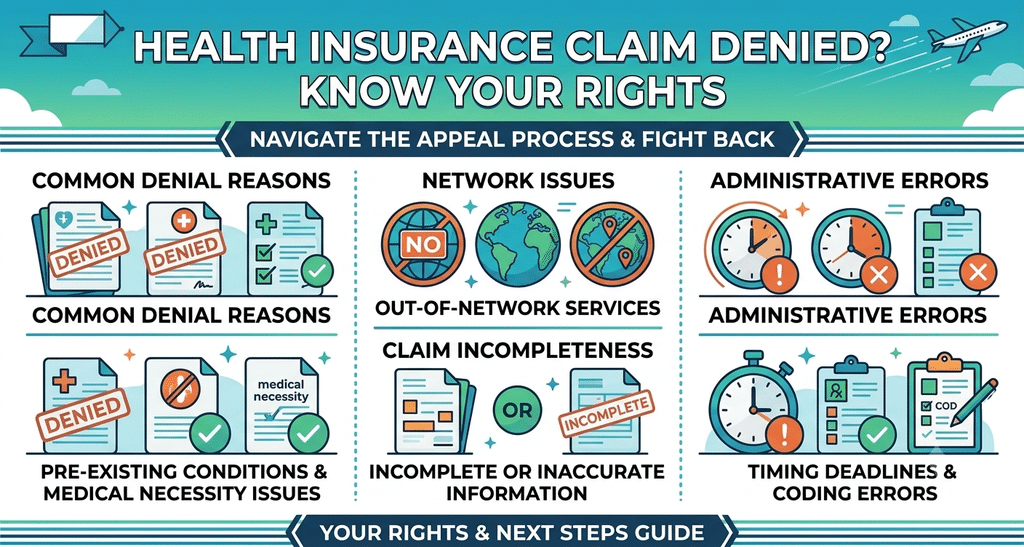
11. Sub-Limits, Co-Payments and Non-Medical Expenses
Some policies include co-payment requirements, deductibles, treatment limits, and restrictions on non-medical expenses.
For example, if your policy requires a 20% co-payment on an eligible ₹1 lakh claim, you may need to contribute ₹20,000.
| Particulars | Amount |
| Eligible claim | ₹1,00,000 |
| Co-payment | 20% |
| Your contribution | ₹20,000 |
| Insurer’s share | ₹80,000 |
However, actual payments depend on the policy’s other terms, limits, and exclusions.
What to Do If Health Insurance Claim Is Denied in India
If you receive a health insurance claim denied notification, avoid immediately accepting the decision.
Instead, follow a structured process.
Step 1: Request the Written Rejection Reason
Ask the insurer to provide a detailed explanation.
Your request should identify:
- Claim reference number.
- Policy number.
- Hospitalization date.
- Total amount claimed.
- Amount rejected.
- Specific policy clause.
- Medical or documentary evidence considered.
A written explanation helps you understand the insurer’s reasoning.
Step 2: Read the Complete Policy Wording
Do not rely only on the policy advertisement or agent’s verbal explanation.
Review the following:
- Coverage benefits.
- Waiting periods.
- Exclusions.
- Room rent restrictions.
- Co-payment requirements.
- Claim submission requirements.
- Pre-authorization conditions.
Compare the rejection reason with the actual wording.
Step 3: Collect Supporting Documents
Prepare a complete appeal file.
Include your policy document, rejection letter, medical reports, hospital bills, prescriptions, and payment receipts.
Additionally, create a timeline showing when you purchased the policy, when treatment occurred, when you submitted the claim, and when the insurer rejected it.
Step 4: Contact the Insurer’s Grievance Redressal Officer
Submit your complaint to the insurer’s official Grievance Redressal Officer.
Explain why you disagree with the decision.
For example:
“I request a review of my rejected hospitalization claim because the rejection letter refers to an exclusion that does not appear to apply to the medical treatment received. Please provide the supporting medical evidence and the exact policy provision relied upon.”
Keep the complaint acknowledgement and reference number.
Step 5: Approach IRDAI Through Bima Bharosa
If the insurer does not resolve your complaint satisfactorily, you can escalate the matter through IRDAI’s grievance mechanism.
Visit:
You can register and monitor your grievance through the portal.
IRDAI also provides a toll-free grievance number: 155255.
Keep copies of your complaint and supporting documents.
Step 6: Approach the Insurance Ombudsman
If the dispute remains unresolved, consider approaching the Insurance Ombudsman.
The Ombudsman provides a mechanism for eligible insurance complaints without requiring the policyholder to begin with ordinary civil litigation.
However, eligibility requirements, monetary limits, procedural rules, and filing deadlines apply.
Review the latest rules and the official Council for Insurance Ombudsmen information before filing.
Website: https://www.cioins.co.in/
Step 7: Consider Consumer Legal Assistance
If the insurer’s decision causes substantial financial loss, consider consulting a qualified insurance or consumer-law professional.
A lawyer can review:
- Your insurance contract.
- Medical evidence.
- Rejection communication.
- Applicable regulations.
- Previous correspondence.
- Available legal remedies.
Do not delay legal advice if a filing deadline applies.
Health Insurance Claim Denied: India Grievance Process
The following table summarizes the main escalation options.
| Stage | Where to complain | Purpose |
| First | Insurance company | Request review and resolution |
| Second | Insurer’s GRO | Formal grievance |
| Third | IRDAI Bima Bharosa | Regulatory grievance monitoring |
| Fourth | Insurance Ombudsman | Eligible insurance dispute resolution |
| Fifth | Consumer Commission or court | Appropriate legal remedies |
How Long Does an Insurance Company Take to Respond?
IRDAI’s grievance FAQ states that an insurer should resolve a policyholder grievance within 15 days of receipt.
For cashless health insurance authorization, the 2024 IRDAI master circular specifies a one-hour timeline for initial authorization and three hours for final authorization at discharge.
These are different processes. A claim grievance, cashless authorization, and reimbursement settlement should not be confused.
Always check the current applicable regulatory requirements.
Can You Appeal a Rejected Health Insurance Claim?
Yes. You can request a review when you believe the insurer has incorrectly applied a policy condition or overlooked relevant evidence.
However, an appeal does not guarantee payment.
Your chances of obtaining a reconsideration may improve when you provide clear documentation and directly address the rejection reason.
What Evidence Should You Include?
Consider preparing:
- Original rejection letter.
- Policy schedule.
- Customer Information Sheet.
- Complete policy wording.
- Hospital discharge summary.
- Medical diagnosis.
- Prescriptions.
- Doctor’s clarification.
- Laboratory reports.
- Hospital invoices.
- Payment receipts.
- Previous insurer communications.
Sample Health Insurance Claim Appeal Letter
Subject: Request for Reconsideration of Rejected Health Insurance Claim
Dear Grievance Redressal Officer,
I am writing to request a review of my health insurance claim, which your company recently rejected.
My policy number is [Policy Number], and my claim reference number is [Claim Number].
I received treatment at [Hospital Name] on [Date]. After submitting the required medical documents and bills, I received a rejection notification.
Please review the matter and provide a written response.
Thank you.
Regards,
[Your Name]
[Contact Details]
What Happens When a Health Insurance Claim Is Denied?
A rejected claim can affect your finances, treatment arrangements, and relationship with the hospital.
However, the consequences depend on the circumstances.
1. You May Need to Pay the Hospital Bill
If the insurer refuses the claim, the hospital may request payment from the patient or the person legally responsible under the admission agreement.
Therefore, ask the hospital for an itemized bill and payment options.
2. You May Need to Use Personal Savings
Some patients use emergency savings to cover medical expenses while they challenge the insurer’s decision.
However, consider the financial impact before withdrawing long-term investments.
3. You Can Request a Reassessment
If you identify an error, submit additional evidence and request reconsideration.
For example, the insurer may have overlooked a medical report or misunderstood the date of diagnosis.
4. You May Need Legal Advice
If the insurer refuses to reconsider the claim, a qualified professional can explain the next available remedies.
Do not assume that every rejected claim requires a lawsuit. Many disputes can be addressed through formal grievance procedures.
Do Unpaid Medical Bills Go Away After 7 Years?
This question is particularly relevant to patients in the United States.
The short answer is no. An unpaid medical bill does not automatically disappear after seven years.
You must distinguish between three separate issues:
- The existence of the debt.
- The time limit for filing a lawsuit.
- The period during which negative information may appear on a credit report.
Medical Debt and the Seven-Year Credit Reporting Rule
In the United States, the Fair Credit Reporting Act generally limits the reporting period for most negative credit information to seven years, subject to specific rules and exceptions.
However, credit reporting limits do not automatically cancel the underlying debt.
The Consumer Financial Protection Bureau explains that creditors may still attempt to collect certain old debts even when the time for legal action has expired.
Source: https://www.consumerfinance.gov/ask-cfpb/how-long-does-information-stay-on-my-credit-report-en-323/
Does Medical Debt Disappear After Seven Years?
Consider this example:
A patient receives a $4,000 hospital bill in 2020 and fails to pay it.
By 2027, the credit reporting period may have expired for certain negative information associated with that debt.
Nevertheless, the debt itself may still exist.
Whether the creditor can file a lawsuit depends on the applicable state’s statute of limitations and other legal circumstances.
Medical Debt Rules in India vs USA
| Issue | India | United States |
| Medical debt | Depends on contract and applicable law | Depends on debt agreement and state/federal law |
| Credit reporting | Indian credit reporting rules apply | FCRA applies |
| Seven-year rule | Do not assume a universal seven-year cancellation | Generally concerns reporting of negative information |
| Lawsuits | Depends on applicable limitation law | Depends on state-specific limitation law |
| Collection rights | Subject to applicable Indian law | FDCPA and other applicable laws may apply |
Important: Do not ignore medical debt notices simply because seven years have passed.
How Often Do People Get Sued for Not Paying Medical Bills?
There is no single reliable nationwide percentage that applies to every American patient with unpaid medical bills.
The likelihood of a lawsuit depends on several factors.
For example:
- Amount of the unpaid bill.
- Hospital or provider collection policies.
- Whether the debt has been sold.
- Whether the patient qualifies for financial assistance.
- Applicable state laws.
- Whether the provider uses third-party debt collectors.
A small outstanding balance may receive different collection treatment from a large hospital debt.
Can a Hospital Sue You for Unpaid Medical Bills?
In certain circumstances, yes.
A healthcare provider or authorized debt collector may pursue legal collection options for a valid unpaid debt.
However, applicable consumer protection laws restrict abusive or misleading collection practices.
Under the Fair Debt Collection Practices Act, covered debt collectors cannot use false, deceptive, or misleading representations.
If you receive a lawsuit, do not ignore it.
Instead:
- Check the court documents.
- Verify the amount claimed.
- Request appropriate debt validation.
- Check whether the statute of limitations applies.
- Review possible financial assistance.
- Seek legal advice.
- Respond before the court deadline.
The Consumer Financial Protection Bureau explains that debt limitation periods vary between states and can depend on the type of debt and applicable agreement.
Is $200 a Month a Lot for Health Insurance?
Whether $200 per month is expensive depends on your location, age, coverage, deductible, family size, and financial assistance.
For an American individual, $200 monthly equals $2,400 annually.
However, this amount may be relatively affordable for one plan and expensive for another.
Calculate Your Annual Health Insurance Cost
Use this simple calculation:
Monthly premium × 12 = Annual premium.
For example:
$200 × 12 = $2,400.
Now consider three different monthly premium options.
| Monthly premium | Annual premium |
| $100 | $1,200 |
| $200 | $2,400 |
| $400 | $4,800 |
| $600 | $7,200 |
These amounts represent premiums only. They do not include deductibles, copayments, coinsurance, or other out-of-pocket expenses.
Is $200 a Month Affordable in California, Texas, Florida, Georgia or New York?
The answer depends on the plan and the person purchasing it.
For example:
- California: Compare available Covered California plans.
- Texas: Review HealthCare.gov marketplace options.
- Florida: Compare marketplace plans and financial assistance.
- Georgia: Review available marketplace coverage.
- New York: Compare NY State of Health plans.
A $200 monthly premium could be attractive for one individual with financial assistance. However, a family policy or a plan with a low deductible could cost considerably more.
Compare Premiums, Deductibles and Out-of-Pocket Costs
Do not choose a policy based only on its monthly premium.
For example:
| Feature | Plan A | Plan B |
| Monthly premium | $200 | $300 |
| Annual premium | $2,400 | $3,600 |
| Annual deductible | $5,000 | $1,500 |
| Maximum out-of-pocket limit | Check plan | Check plan |
Plan A costs $1,200 less in annual premiums.
However, Plan B has a lower deductible. Therefore, someone who expects frequent medical treatment may prefer to compare the total expected cost rather than simply choosing the cheapest premium.
Money-saving tip: Compare the annual premium, deductible, copayments, coinsurance, provider network, and prescription coverage before purchasing a policy.
Health Insurance Claim Denied: India vs USA
India and the United States have different insurance systems.
Therefore, a policyholder should not apply American medical debt rules to an Indian insurance dispute or assume that Indian grievance procedures apply to an American policy.
Important Differences
| Category | India | USA |
| Insurance regulator | IRDAI | State insurance departments and federal agencies, depending on issue |
| Complaint mechanism | Insurer, IRDAI, Ombudsman | Insurer, state regulator, relevant federal channels |
| Cashless treatment | Available under eligible policies | Depends on network and plan |
| Medical debt collection | Applicable Indian law | Federal and state consumer protection laws |
| Credit reporting | Indian credit reporting system | Fair Credit Reporting Act |
| Legal assistance | Insurance and consumer-law professionals | Healthcare consumer attorneys and debt attorneys |
What Should Indian Policyholders Remember?
Read your insurance policy before purchasing it.
Check waiting periods, exclusions, room rent restrictions, co-payments, and claim procedures.
Additionally, keep all medical records and communication with the insurer.
What Should American Patients Remember?
Understand your network coverage, deductible, out-of-pocket maximum, and medical bill rights.
If you receive an unexpected bill, request an itemized statement and check whether the No Surprises Act or another applicable protection applies.
When Should You Contact a Health Insurance Dispute Lawyer?
Not every insurance disagreement requires legal representation.
However, professional assistance may become valuable when the financial impact is significant or the insurer repeatedly refuses to explain its decision.
Situations Where Legal Assistance May Help
- The insurer rejects a claim without identifying a clear policy provision.
- The insurer allegedly misinterprets a medical exclusion.
- The insurer disputes a pre-existing condition.
- The insurer delays a claim without a satisfactory explanation.
- The insurer refuses to consider relevant evidence.
- You face a substantial hospital bill.
- A grievance remains unresolved.
- You receive a legal notice relating to unpaid medical expenses.
How to Choose a Health Insurance Lawyer
Before hiring a lawyer, consider the following:
- Relevant insurance dispute experience.
- Knowledge of health insurance regulations.
- Experience with consumer complaints.
- Clear explanation of legal fees.
- Written engagement terms.
- Honest assessment of your available remedies.
Ask about consultation charges and expected expenses before proceeding.
CTA: Explore qualified insurance and consumer-law assistance if your claim remains unresolved.
How to Prevent Future Health Insurance Claim Rejections
Prevention can save time, money, and stress.
Before purchasing or renewing your insurance, review the following checklist.
Health Insurance Policy Checklist
- Disclose your medical history accurately.
- Review pre-existing disease waiting periods.
- Understand alcohol-related exclusions.
- Check room rent restrictions.
- Understand co-payment conditions.
- Check the hospital network.
- Review treatment-specific exclusions.
- Maintain premium payment receipts.
- Keep medical bills and prescriptions.
- Understand cashless and reimbursement procedures.
- Check claim submission deadlines.
- Read the Customer Information Sheet.
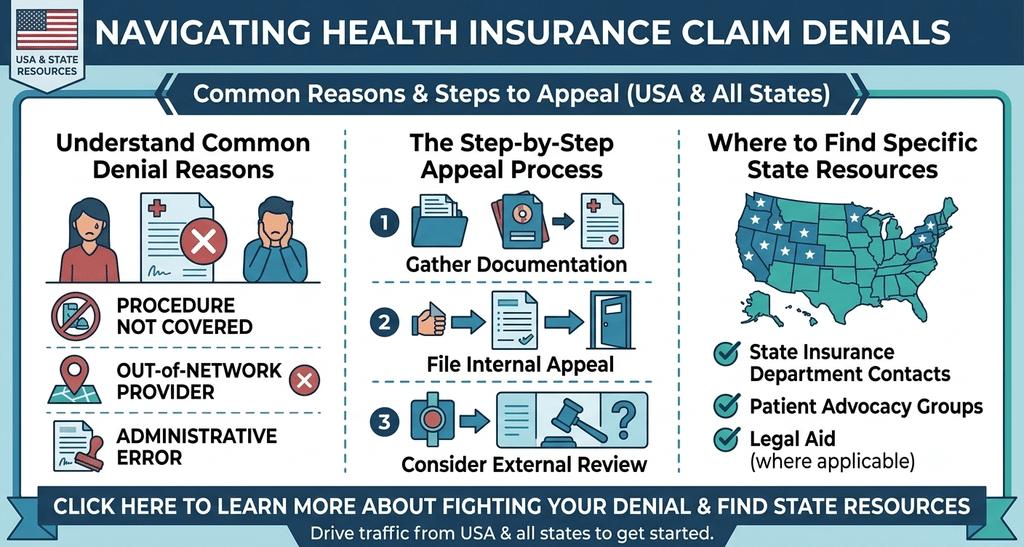
Why the Customer Information Sheet Matters
The Customer Information Sheet provides important information about your policy.
It can help you understand coverage, exclusions, waiting periods, claims procedures, and other important conditions.
Do not purchase a policy based only on a sales advertisement.
Instead, compare the actual coverage and exclusions.
Calculate Your Potential Out-of-Pocket Medical Expenses
Understanding your possible financial responsibility can help you choose suitable insurance coverage.
Consider this hypothetical example.
A patient receives hospital treatment costing ₹2,50,000.
The insurer approves eligible expenses of ₹2,20,000 after applying relevant policy conditions.
The remaining amount includes ₹30,000 in expenses that the policy does not cover.
| Particulars | Amount |
| Total hospital bill | ₹2,50,000 |
| Eligible expenses | ₹2,20,000 |
| Non-covered expenses | ₹30,000 |
| Potential patient payment | ₹30,000 |
Now imagine that the policy also includes a 10% co-payment on the approved amount.
The calculation becomes:
10% × ₹2,20,000 = ₹22,000.
If that co-payment applies independently to the eligible expenses, the potential patient contribution becomes ₹52,000, assuming no other adjustments.
This example illustrates why policyholders should understand both coverage limits and payment-sharing conditions.
Frequently Asked Questions About Health Insurance Claim Denied
Request the rejection letter, identify the policy clause, collect your medical records, and contact the insurer’s grievance department. If the dispute remains unresolved, consider the appropriate escalation channels.
Yes, an insurer may reject a claim when a valid policy exclusion or condition applies. However, the insurer should provide a reason supported by the policy and applicable rules. You can challenge an incorrect decision.
First, request the written rejection reason. Next, submit a grievance to the insurer. If the matter remains unresolved, approach IRDAI through Bima Bharosa and consider the Insurance Ombudsman or other appropriate legal remedies.
You may recover eligible expenses if the insurer reverses its decision after reviewing your appeal or if an appropriate dispute resolution body or court grants relief. Payment is not guaranteed.
No universal rule makes every medical claim invalid simply because the patient consumes alcohol. The relevant policy exclusion, circumstances, medical evidence, and applicable law determine the outcome.
No. In the United States, the seven-year period generally concerns the reporting of negative information on credit reports. It does not automatically cancel the debt or prevent every collection attempt.
There is no single reliable national percentage that applies to all unpaid medical bills. Lawsuits depend on the provider, debt amount, collection practices, and applicable state laws.
It depends on your age, location, plan, deductible, coverage, and financial assistance. Always compare annual premiums and out-of-pocket costs before choosing a policy.
Conclusion: Don’t Give Up After a Health Insurance Claim Denial
A health insurance claim denied notification can be frustrating, especially when you need financial support for medical treatment.
However, you should not assume that every rejection is final or correct.
Start by requesting the insurer’s written explanation. Next, review your policy wording and gather the relevant medical documents. If you identify an error, submit a detailed appeal.
For Indian policyholders, the insurer’s grievance department, IRDAI’s Bima Bharosa portal, and the Insurance Ombudsman offer important escalation options.
Meanwhile, American patients should understand medical debt collection rules, credit reporting protections, and state-specific limitation periods.
Most importantly, choose health insurance carefully. Compare coverage, waiting periods, exclusions, deductibles, and claim procedures before purchasing a policy.
Your health insurance policy should protect your financial well-being. Understanding your rights is the first step toward challenging an unfair claim rejection and making informed healthcare decisions.
Sources and References
The following official and established resources can help readers verify insurance rules and understand their rights.
- Insurance Regulatory and Development Authority of India (IRDAI) – Indian insurance regulation and policyholder information.
- IRDAI Bima Bharosa – Insurance grievance registration and monitoring.
- Council for Insurance Ombudsmen – Insurance dispute resolution information.
- India Code – Indian legislation and regulatory material.
- Consumer Financial Protection Bureau – Medical debt and debt collection information.
- CFPB: How Long Does Information Stay on My Credit Report? – Credit reporting periods.
- CFPB: Can Debt Collectors Collect an Old Debt? – Debt collection and limitation periods.
- KFF 2025 Employer Health Benefits Survey – US health insurance premium statistics.
- Healthcare.gov – US marketplace insurance information.
- National Association of Insurance Commissioners – US state insurance regulation resources.
Important Disclaimer
This article provides general educational information about health insurance claims, medical expenses, and consumer rights in India and the United States. It does not constitute legal, medical, or financial advice.
Insurance coverage depends on the policy contract, medical evidence, applicable regulations, and individual circumstances. US medical debt and credit reporting rules can differ by state and situation. Readers should consult the relevant regulator, insurer, or qualified legal professional before making decisions.

Karthick is the Founder of Wandersure Coverage, a travel and insurance-focused blog helping global travelers make smarter decisions.
Based in Chennai, India, Karthick has several years of experience researching international travel, travel insurance policies, and legal resources such as accident attorneys in the United States. He has published 700+ articles covering travel packages, insurance guides, and trip planning tips.
While not a licensed insurance broker or attorney, Karthick spends extensive time analyzing policy terms, coverage details, and real-world travel scenarios. His goal is to simplify complex information into clear, practical advice so travelers can stay protected and travel with confidence.
He regularly updates content to reflect the latest travel rules, insurance policies, and legal guidelines for international travelers.
Follow Karthick’s published work on Medium: https://medium.com/@skrtraveldeals