

Walk through an imperial courtyard, then stand beside an ancient wall: China’s past can feel close and vast at once. Historical places in China range from palaces and defenses to ancient cities and archaeological sites. Since these places span a large country, you will need to choose a region instead of trying to see everything in one trip.
A UNESCO World Heritage Site is a place recognized by UNESCO for its cultural or natural significance. This recognition can point you toward places with deep history, but it does not decide which one fits your interests or schedule. The right mix depends on the time you have and the parts of the past you want to see.
This article helps you compare major sites, think through city choices, and plan a practical visit. You will find a mix of well-known stops and useful travel advice, starting with Beijing’s imperial landmarks.
Discover China’s Hidden Historical Wonders — Explore More Travel Guides →
Key Takeaways
- Choose a region before adding distant sites to your itinerary.
- Beijing pairs imperial landmarks with nearby Great Wall sections.
- Xi’an offers archaeological history and a historic urban setting.
- Some sites need advance planning, including the Mogao Caves.
- A week’s budget depends on whether international airfare is included.
- Check local access and transport before you set out.
Which Historical Places in China Should You Visit in Beijing?
For a first visit focused on imperial history, choose the Forbidden City and Summer Palace, then add the Ming Tombs if you have another day. These historical places in China to visit show royal power, leisure, and burial traditions in distinct settings.
The Forbidden City is the strongest first stop for understanding emperors’ rule. The Summer Palace suits visitors who want gardens and water, while the Ming Tombs take more travel time outside the capital.
For a first visit focused on imperial history, choose the Forbidden City and Summer Palace, then add the Ming Tombs if you have another day.
Planning a Trip to China from the USA? Start Here — Plan Your China Adventure →
The Forbidden City and the scale of imperial rule
The Forbidden City has nearly 1,000 preserved buildings. It served as the home of emperors from the Ming and Qing dynasties until 1911.
Instead of rushing through every courtyard, notice how gates, halls, and open spaces mark changes in access and rank. The palace’s size helps explain how imperial rule shaped daily life and ceremony.
For many travelers, it belongs among the top 10 historical places in China because it connects architecture with political history. Give yourself time to pause between major halls rather than treating the visit as a quick walk-through.
The Summer Palace’s lakeside gardens
The Summer Palace offers a different pace, with gardens, paths, and views across the lake. Built in 1750, it served as a retreat from the formal setting of the Forbidden City.
Look for the Long Corridor, which stretches 728 meters and contains more than 14,000 paintings. Its covered walkway links parts of the grounds while turning the route into a gallery.
Allow room for a slow walk, since the setting rewards looking across the water as well as at individual buildings. The palace and garden make a useful contrast with the dense courtyards downtown.
Ming Tombs beyond the capital
The Ming Tombs complex contains the remains and treasures of 13 members of the Ming Dynasty. It is a separate stop outside Beijing, not another part of the Forbidden City.
Do not confuse the complex with the first Ming emperor’s tomb, which is in Nanjing. The tombs outside Beijing offer a look at royal burial customs and the way a ruling family marked its place in history.
You can keep the Forbidden City and Summer Palace as a more compact palace-and-garden visit. The Ming Tombs make a longer excursion, so plan that extra travel before turning to the Great Wall.
Where Can You Walk the Great Wall of China?
The Great Wall of China is China’s best-known landmark, but you need to choose a section to visit. The Great Wall stretches more than 13,000 miles in total, across a defensive system built over nearly two millennia.
It is a network of walls and related defenses, not one uniform wall. Restored visitor sections offer clearer paths and easier access, while remote or unrestored stretches need more care and may not suit a casual day trip.
People asking what is the most famous landmark in China often have this immense structure in mind. Its global recognition comes from its scale, history, and striking route over mountain ridges.
Choose a visit that fits your comfort and mobility. A restored section can make the experience easier to manage, while rougher terrain calls for more planning and caution.
- Wear sturdy footwear with a good grip.
- Carry enough water for your planned walk.
- Check section access and transport before setting out.
Access and transport can differ by section, so do not assume every stretch works as a simple stop from Beijing. Match the distance and terrain to your energy, then move from monumental defenses to Xi’an’s archaeological site.
What Makes the Terracotta Army Worth Seeing?
The Terracotta Army was created to accompany and protect China’s first emperor in the afterlife. Farmers uncovered the figures in 1974, and their scale makes the site one of the most striking archaeological visits near Xi’an.
About 8,000 life-sized soldiers, along with horses and chariots, form the burial complex. The figures date to 210-209 BCE, and about 2,000 are on display.
It can be hard to grasp the full scale by looking across one hall. Each figure has distinct details, and the rows make more sense when you know they served a purpose tied to the emperor’s afterlife.
Learn some basic history before arriving. A little context helps you read the figures as part of a planned burial complex, rather than as a large group of similar statues.
- Compare faces and notice how their features vary.
- Look at armor details across different figures.
- Study how the soldiers stand in formation.
These details give you a way to look beyond the number of figures. The site combines art, military order, and beliefs about life after death.
Leave enough time to take in the archaeological scale, including more than one display area. Xi’an also has a historic attraction inside the city, where the visit shifts from excavation halls to an urban rampart.
What Can You See on the Xi’an City Wall?
From the Xi’an City Wall, you can look across the older part of the city from its ramparts. The wall surrounds this historic core and gives you a view of the urban pattern from above.
Walking or cycling the wall changes the pace and perspective of a visit. On foot, you can stop to look at towers and the streets below; a bicycle lets you cover more of the wall during your available time.
The wall feels different from a museum or burial site because the city continues around it. You can see old and newer parts together, with everyday movement unfolding below the historic structure.
An evening visit can make the illuminated wall and surrounding cityscape especially appealing. The view changes with conditions, so treat the timing as a chance for a different mood, not a guarantee of a particular scene.
Check how much time you want to spend on the ramparts before choosing a walk or bike ride. Xi’an combines archaeological history with a living urban setting, then the route can move west toward the old Silk Road region.
Why Visit the Mogao Caves in Dunhuang?
Hundreds of caves preserve a vast collection of Buddhist art in the Gobi Desert. Work on the Mogao Caves began in 366 AD, and the complex links religious art with the old Silk Road.
The site holds 492 caves, more than 2,000 painted sculptures, and murals covering about 45,000 square meters. Visitor numbers are capped to help protect these fragile works.
Murals and sculptures show how art and belief developed along routes that connected distant communities. The caves preserve layers of work, so look closely rather than treating the visit as a quick set of stops.
Plan access in advance because visitor numbers are limited. The World Heritage Site is a careful visit, where a slower pace gives you more time to notice color, figures, and painted details.
The Mogao Caves make sense as part of the wider Silk Road region, not as an isolated art stop. That ancient trade network also connected cities, including another remarkable settlement farther west.
What Is Special About the Ancient City of Jiaohe?
Jiaohe’s location on a river island made geography part of its defense. More than 2,000 years old, the Ancient City of Jiaohe was an important stop on the old Silk Road.
Rivers around the island offered a natural barrier, while the dry climate helped the remains survive. The setting shaped both the city’s layout and its protection.
Rather than relying on a built wall alone, the city used its raised island setting to limit access. The remaining structures let visitors see how location influenced the design of an ancient city.
Jiaohe was gradually abandoned amid pressure from successive ruling groups, including the Mongols. Its remains show change over time, not a city frozen by one sudden event.
Look across the site and the surrounding land to understand why people chose this place. Seeing an ancient city in its landscape gives the ruins meaning beyond their age, then the route turns to a temple high on a cliff.
What Makes the Hanging Temple of Hengshan Unusual?
The Hanging Temple of Hengshan stands about 250 feet above the ground on a cliff. Its position gives the buildings a dramatic look, while its religious history sets it apart from other mountain sites.
The temple brings together Buddhism, Taoism, and Confucianism. That mix is historically significant in its own right, separate from the visual drama of its cliffside setting.
As you approach, the height changes how you see the structure. The temple appears to cling to the rock, making its construction and setting central parts of the visit.
The blend of three traditions offers a different view of religious culture and practice. Notice that this importance comes from the temple’s shared spiritual character, not just its unusual position.
Check access arrangements before making a trip, since the site’s location affects how you plan the visit. The cliffside setting makes this a destination to plan around, then you can turn to a historic city made for exploring on foot.
How Does Pingyao Preserve Old China?
Enter Pingyao through its city wall and you reach a town whose streets still preserve historic character. This walled city dates to the 14th century and remains a UNESCO World Heritage Site.
Pingyao’s historic urban fabric survived modernization largely intact. That makes it different from a single palace or excavation: the town itself gives you a street-level view of its past.
Narrow lanes lead past traditional courtyard homes and older buildings. Look at how doorways and courtyards face the street, then notice the city wall that frames the town.
Walking through the lanes lets you see a preserved urban area rather than one stand-alone landmark. The tiled rooftops can be especially appealing from the wall near sunset, though the view depends on the day.
Move slowly through the streets so details do not blur into one long walk. Several Chinese cities offer different layers of history, and comparing them helps you decide which kind of past matters most to your trip.
What Are Some Famous Cities to Visit in China?

Beijing, Shanghai, Xi’an, and Chengdu are useful starting points for different visitor interests. Each city offers a different mix of history, city life, and cultural experiences.
Choose a city for the experience you want, not just its fame. These landmarks and urban settings can shape very different trips across a large country.
| City | Best-known visitor draw | Why it suits a different kind of trip |
|---|---|---|
| Beijing | Imperial heritage | Strong choice for palace history and major landmarks |
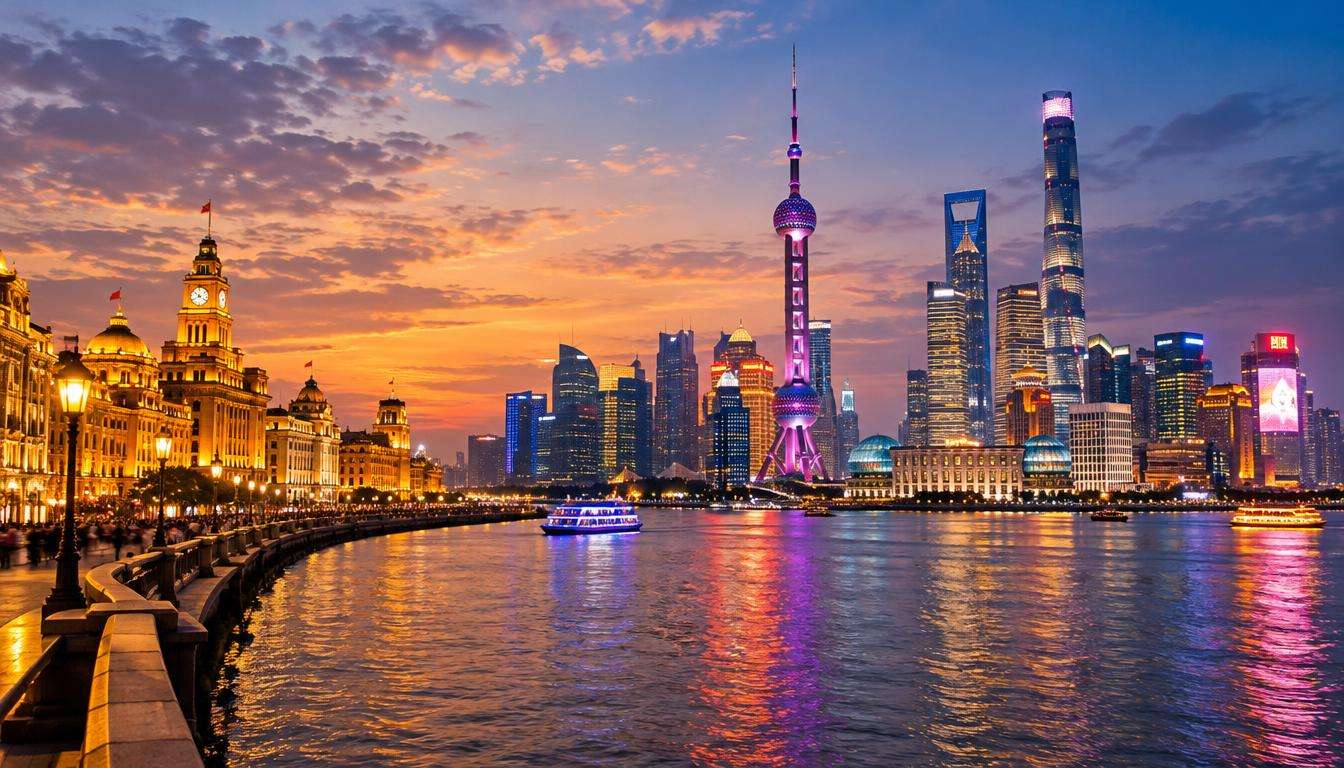
| Shanghai | The Bund and modern skyline | Pairs historic waterfront buildings with city views |
| Xi’an | Archaeological heritage | Fits travelers drawn to ancient sites and relics |
| Chengdu | Urban culture | Suits a trip centered on city life and local culture |
Use these three factors to narrow your choices:
- Trip length: fewer days favor fewer city bases.
- Regional priorities: nearby stops reduce long transfers.
- Interests: decide how much history or city life you want.
Famous destinations are not always the cities with the deepest historic layers. If history is your main goal, consider places whose importance changed across several periods, then compare those historic centers more closely.
What Are the Most Historic Cities in China?
Xi’an and Beijing are strong choices for visitors seeking visible historical depth, while Nanjing, Luoyang, and Hangzhou reveal different eras. These cities help answer which places can introduce you to ancient China.
No single modern city represents every ancient capital or period. The main cities of ancient China rose in importance at different times, shaped by changing dynasties and political centers.
| City | Historical association | A visitor-facing reason to choose it |
|---|---|---|
| Beijing | Imperial rule and later dynasties | See palaces and landmarks linked to emperors |
| Xi’an | Chang’an and ancient dynasties | Explore archaeological sites and a historic city |
| Nanjing | Capital in several periods | Choose it to follow a different line of imperial history |
| Luoyang | Ancient capital for several dynasties | Visit a city with a long record of political importance |
| Hangzhou | Historic center in later periods | Pair urban history with its well-known setting |
Xi’an, also known as Chang’an in earlier periods, held importance under several dynasties. Luoyang likewise served as a capital at different times, making both useful starting points for understanding ancient China.
Nanjing and Beijing show how political power shifted across the country. Hangzhou adds another important center, with its own place in the history of cities and dynasties.
Their histories do not fit into one simple timeline of capitals. Choosing a city narrows the history you will focus on, then a practical question comes into view: what might a week in China cost?
Is $1,000 Enough for a Week in China?
$1,000 is about $143 a day for seven days before airfare, and it may work for a budget-conscious trip if international flights are separate. Including airfare can make that amount tight or insufficient.
Your total changes with lodging, intercity transport, meals, entry fees, season, and city choice. A busy travel period or long transfers can put more pressure on your budget.
What the $1,000 budget needs to cover
Start by listing the costs you will face during the week. Lodging and transport can take a large share, while meals and entry fees add up across each day.
For $1,000 in China, your assumptions matter as much as the daily average. A lower-cost room leaves more for getting between places, while several long-distance transfers can quickly change the balance.
How to make a limited budget go further
Choose fewer city bases and look for a route that limits backtracking. Keep some room for the entry fees that matter most to you instead of assuming every site fits.
Plan meals and lodging around the kind of trip you want, then adjust the number of stops to match. Set your airfare and lodging assumptions first, and geography can help shape an itinerary you can afford.
- Separate international airfare from your on-the-ground budget.
- Choose city bases before adding distant stops.
- Leave room for transport and entry fees.
A week has limited room for long transfers across the country. The best route depends on how many days you have and which region you want to explore.
How Should You Plan a Route Through China’s Historical Sites?

The best route depends first on how many days you have and which region matters most. Since the country is large, a focused plan usually gives you more time at each stop.
Do not treat the top 10 places to visit in China as a checklist for one short trip. Pick a region, then add nearby sites that suit your interests and travel time.
Keep a trip focused on Beijing and nearby sites
A Beijing-centered visit can pair the city’s historic core with the Great Wall and Ming Tombs. You can use one city base for several nearby experiences, rather than crossing the country between stops.
Leave time for travel to the wall and tombs, not just time inside each site. A smaller area can still offer a range of architecture, defenses, and royal history.
Combine Xi’an with a western Silk Road stop
Xi’an pairs well with a visit to Dunhuang if you have enough days for the longer distance. The trip connects archaeological history with a major Silk Road site and its desert setting.
Plan each leg before you add extra places. If your schedule is tight, focusing on Xi’an can be more rewarding than rushing west and back.
Choose fewer regions for a longer journey
A longer trip can cover more than one region, but it still needs breathing room. Build in time for city travel and local transfers instead of counting only the hours spent at the sites.
| Region | City base | Historical anchor | Complementary stop |
|---|---|---|---|
| Beijing | Beijing | Great Wall | Ming Tombs |
| Xi’an | Xi’an | Terracotta Army | Xi’an City Wall |
| Dunhuang | Dunhuang | Mogao Caves | Nearby desert scenery |
These pairings help you connect historical sites with stops in the same region. Choose fewer places when travel time is limited, and keep each day realistic.
- Pick a region as your starting point.
- Choose one main historical anchor.
- Add a nearby stop that fits your available time.
A focused itinerary leaves room to experience each place instead of hurrying through it. Once your core route is clear, you can add a landmark that brings another side of China into view.
Which Other Landmarks Add a Different Side of China?
A riverfront skyline or mountain setting gives you a different experience from a palace or wall. These landmarks in China can add urban views, ritual architecture, or time in nature to a history-focused trip.
Choose one complementary stop that fits your route and interests. The question “what are 4 famous landmarks in China” has many possible answers, depending on whether you want city views or natural scenery.
| Landmark | Location | What it adds |
|---|---|---|
| The Bund | Shanghai | Waterfront contrast between historic buildings and a modern skyline |
| Temple of Heaven | Beijing | Imperial ritual architecture in a park setting |
| Zhangjiajie National Forest Park | Hunan | Dramatic sandstone scenery and time in nature |
| Mount Tai | Shandong | Sacred mountain scenery and historic pilgrimage ties |
A search for the 40 most beautiful places in China calls for a much broader list than this history-focused selection. These examples are options to complement your trip, not a complete ranking of the country’s landmarks.
Match a stop to what you want to see:
- Skyline: choose a riverfront city view.
- Ritual architecture: add a temple and park.
- Dramatic nature: make room for sandstone scenery.
- Mountain pilgrimage: visit a sacred mountain landscape.
Consider how much travel the stop adds, as well as what you want from it. One well-chosen landmark can widen the trip without turning it into a string of distant destinations.
Choose one complementary stop that fits your route and interests.
Pick a single extra that works with your base city and the time you have. Then check site access and transport before you lock in your plans.
Conclusion
A strong first China itinerary is focused, not comprehensive. You will have a better trip if you prioritize one region instead of trying to cover the whole country.
Match your stops to the history or landscape that interests you most. A few well-chosen places can give you a clearer sense of the country than a rushed tour of distant sites.
Choose a home base, then check access requirements for the places you want to see. Confirm those details before committing to transport and lodging.
Which Chinese Historical Landmark Is on Your Bucket List? Share your favorite in the comments and discover your next destination →
Frequently Asked Questions
The Forbidden City is linked to the traditional figure of 9,999 rooms. That number is a familiar cultural claim, not a reliable count of rooms visitors can tour. The palace has nearly 1,000 preserved buildings, and public access follows set visitor areas. The traditional number reflects the complex’s association with imperial power, rather than a room-by-room guide to the site.
A strong visitor shortlist includes the Great Wall, Forbidden City, Terracotta Army, Summer Palace, and Mogao Caves. The order depends on what interests you most. Choose the Great Wall for a defensive landmark, the Forbidden City for imperial history, or the Mogao Caves for Buddhist art. The Terracotta Army and Summer Palace offer very different experiences near Xi’an and Beijing.
A commonly used simplified sequence is Xia, Shang, Zhou, Qin, Han, Sui, Tang, Song, Yuan, Ming, and Qing. That is eleven dynasties in this list, not twelve, because historical lists differ in what they count. Some include the Three Kingdoms period or other divided eras and competing regimes. China’s history did not pass through one uninterrupted line of rulers.
Chang’an, Luoyang, Nanjing, and Beijing were among the major cities of ancient China. Their prominence shifted across dynasties as political power moved. Chang’an, now part of Xi’an, was a major capital in earlier periods, while Luoyang served as a capital for several dynasties. Nanjing and Beijing also rose to importance at different times.
There is no single agreed answer because “oldest” can mean continuous settlement, a traditional founding date, or surviving urban remains. Xi’an and Luoyang both have very long histories and strong ties to ancient capitals. The answer changes with the measure used, so a city’s age alone does not settle the question. Each offers a different way to explore early Chinese history.
The Great Wall of China is the landmark most widely recognized internationally. Its long defensive network crosses varied terrain and has become a strong symbol of China. The Forbidden City and Terracotta Army are also major icons, each known for a different part of the past. Which one feels most memorable depends on whether you prefer architecture, archaeology, or monumental defenses.
The commonly cited total length of the Great Wall of China is more than 13,000 miles. That figure describes a network of sections and related defenses, not one uninterrupted wall. Different parts were built across nearly two millennia, and the condition of each stretch varies. Visitors usually explore one accessible section rather than attempting to follow the full route.
Why You Can Trust This Guide
Planning an international trip is easier when historical information and practical travel advice come from reliable sources. This guide to the 10 epic historical places in China every American must see is designed to help readers discover important cultural landmarks while making informed travel decisions.
To support historical accuracy, we refer to the UNESCO World Heritage Centre, which documents the cultural significance of destinations such as the Great Wall of China, the Imperial Palaces of the Ming and Qing Dynasties, and the Mausoleum of the First Qin Emperor. These records help readers understand why these places are important to China’s history and cultural heritage.
We also recommend checking official travel guidance before making arrangements. The U.S. Department of State provides travel advisories and information about entry requirements, local laws, and safety considerations for American travelers. Because travel conditions and entry rules can change, readers should verify the latest guidance before departure.
Our goal is to provide useful historical context and realistic planning suggestions rather than make exaggerated promises about a destination. Visiting ancient monuments, imperial palaces, archaeological sites, and religious landmarks can offer different perspectives on China’s past, but each traveler’s experience will depend on their interests, itinerary, and preparation.
About firsthand experience: This article is based on published historical and official travel resources. It does not claim that the author personally visited every destination or interviewed American travelers. Where personal travel experiences are discussed, they should be supported by identifiable sources and clearly presented as individual opinions rather than universal facts.
We encourage readers to use the references below to explore the history of each destination, confirm current visitor information, and plan responsibly. Our aim is to make travel research more transparent, helpful, and trustworthy for readers in the United States and beyond.
Sources and References
- UNESCO World Heritage Centre — China: Explore China’s World Heritage Sites. Official records of recognized heritage properties and their historical importance.
- UNESCO — The Great Wall: Read the Great Wall’s World Heritage record. Historical background and information about the wall’s defensive role and architectural significance.
- UNESCO — Imperial Palaces of the Ming and Qing Dynasties: Explore the Forbidden City and related imperial heritage. Information about the palaces, their architecture, and their role in Chinese imperial history.
- UNESCO — Mausoleum of the First Qin Emperor: Learn about the archaeological site and Terracotta Army. Historical and archaeological information about China’s first emperor and his burial complex.
- U.S. Department of State — China Travel Advisory: Review official travel guidance for Americans. Check the current advisory, entry requirements, and relevant safety information before traveling.
Disclaimer: This article is intended for general educational and travel-planning purposes only. It is not a substitute for official travel advice. Admission prices, opening hours, access restrictions, and entry requirements may change, so confirm current details with the relevant authorities before booking your trip.
Real Travelers’ Stories: What It’s Like to Visit China’s Historic Landmarks
Reading about China’s ancient landmarks is fascinating, but hearing about the experiences of people who have visited them can make travel planning more realistic. Traveler reviews reveal not only what makes these destinations memorable but also the practical challenges visitors may encounter.
The following stories are based on publicly available traveler reviews on Tripadvisor. They reflect individual experiences, not guarantees that every visitor will have the same experience.
1. Walking Along the Great Wall of China
For many travelers, visiting the Great Wall is a bucket-list experience. In reviews of the Mutianyu section near Beijing, visitors describe spectacular mountain scenery, impressive stone fortifications, and the feeling of seeing one of the world’s most famous historical landmarks in person.
Some reviewers also mention that the experience can be physically demanding. Steep steps, long walks, summer heat, and queues for cable cars may affect the visit. Travelers who arrived early reported enjoying quieter periods before larger crowds arrived.
What future visitors can learn: Plan your transportation in advance, carry water, wear comfortable walking shoes, and allow enough time to explore. If mobility is a concern, check the available cable car and chairlift arrangements before visiting.
Source: Read real visitor reviews of the Mutianyu Great Wall on Tripadvisor.
2. Discovering Imperial History at the Forbidden City
Visitors exploring the Forbidden City in Beijing can experience centuries of Chinese imperial history through its enormous courtyards, ceremonial halls, and traditional architecture.
In Tripadvisor reviews of guided visits, travelers have highlighted the value of knowledgeable guides who explain the stories behind the palace buildings and historical objects. Some visitors particularly appreciated learning details they might otherwise have missed while exploring independently.
What future visitors can learn: Research the palace’s history before arriving, reserve admission through the appropriate official channel, and leave enough time to explore. A reputable guide may help you understand the historical significance of the buildings rather than simply walk past them.
Source: Explore traveler experiences of Beijing’s historical attractions and guided tours.
3. Making the Most of a Great Wall Day Trip
Another recurring theme in visitor reviews is the importance of planning transportation. Mutianyu is outside central Beijing, so reaching the attraction and arranging the return journey can take additional time.
Some travelers describe using private drivers or organized tours to simplify the journey. Others recommend starting early to avoid the hottest part of the day and reduce time spent waiting in queues.
What future visitors can learn: Compare the cost and convenience of public transportation, private transfers, and guided tours. Confirm what is included in your booking, such as admission, shuttle buses, and cable cars.
Source: Read additional Mutianyu Great Wall visitor reviews.
What These Experiences Tell Us
These traveler accounts illustrate an important lesson: a memorable historical trip involves more than choosing famous landmarks. Transportation, physical fitness, weather, visitor numbers, and preparation can all influence the experience.
For Americans planning a journey to China, checking recent reviews alongside official historical and travel information can help set realistic expectations.
Our recommendation: Before visiting any of these destinations, check current admission arrangements, opening hours, accessibility information, and travel guidance. Individual reviews can offer useful practical insights, but official sources are better for confirming rules and historical facts.
Editorial transparency: The experiences above are summaries of publicly available traveler reviews, not personal experiences of the author. Reviewer opinions are subjective and may change over time. Review platforms and official visitor sources should be consulted directly for the latest information.

Karthick is the Founder of Wandersure Coverage, a travel and insurance-focused blog helping global travelers make smarter decisions.
Based in Chennai, India, Karthick has several years of experience researching international travel, travel insurance policies, and legal resources such as accident attorneys in the United States. He has published 700+ articles covering travel packages, insurance guides, and trip planning tips.
While not a licensed insurance broker or attorney, Karthick spends extensive time analyzing policy terms, coverage details, and real-world travel scenarios. His goal is to simplify complex information into clear, practical advice so travelers can stay protected and travel with confidence.
He regularly updates content to reflect the latest travel rules, insurance policies, and legal guidelines for international travelers.